


Retinitis Pigmentosa
REQUEST A CALL BACK!

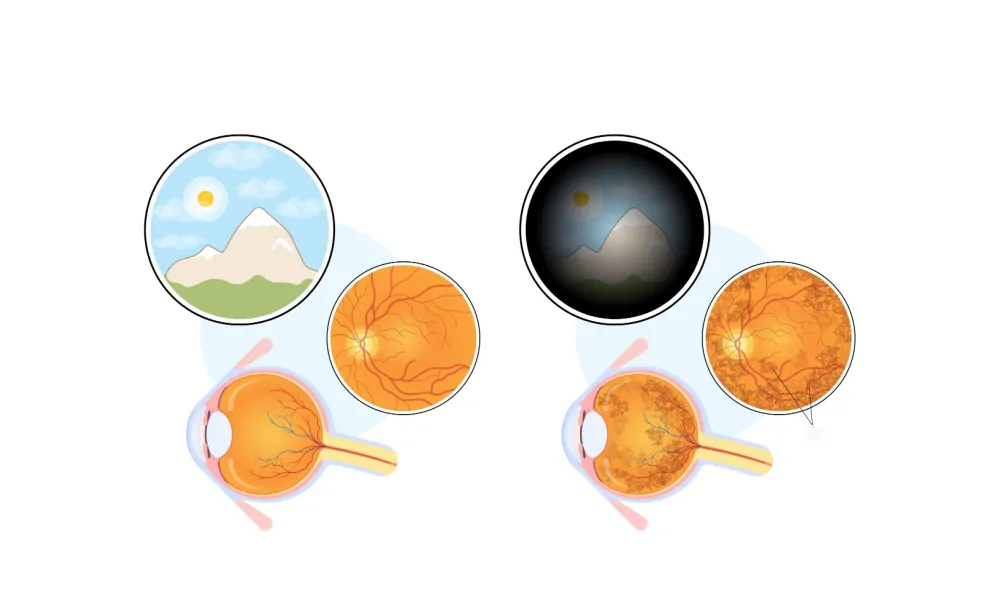
Retinitis pigmentosa is a health problem that causes damage to the retina and can arise due to genetic factors. Retinal pigmentosa disease can lead to cell loss because when this disease occurs, rod cells are damaged and begin to die first, followed by cone cells. This condition, one of the retinal diseases that should not be ignored, can cause deterioration in individuals’ overall eye health and even lead to problems such as blindness. For all these reasons, it is necessary to be informed about this hereditary eye disease and not to ignore appropriate treatments. Let’s take a look at the frequently asked questions and important details about this condition.
What is Retinitis Pigmentosa?
Retinitis pigmentosa is a health problem that causes damage to the cells in the retina layer, which have very important properties such as light sensitivity. This hereditary condition is a health problem that is so risky that it can lead to permanent and complete blindness in later stages. It is a disease that requires urgent treatment with methods appropriate for the individual due to its damage to visual functions. Understanding retinal conditions like detached retina treatment and torn retina treatment can help patients recognize the urgency of seeking proper medical care.

What Causes Retinitis Pigmentosa?
There are several causes of this condition. However, the most common cause and a strong factor in the development of the disease is genetic factors. The condition caused by genetic variants usually occurs due to hereditary factors rather than external factors.
What Are the Risk Factors for Retinitis Pigmentosa?
There are multiple factors among the risk factors for this hereditary eye disease. Many factors, primarily genetic factors, which can be categorized into different groups, may trigger the condition. The risk factors can be explained under several headings.
Genetic Factors
The biggest risk factor for retinitis pigmentosa is genetic factors. Genetic factors are very important factors in terms of the energy production of retinal cells, their sensitivity to light, and their overall health. Therefore, this disease can occur due to genetic factors.
Relationship with Lifestyle
The condition is also related to individuals’ lifestyles. Although the effect of lifestyle factors on the development of the disease is quite low, it cannot be ignored. In particular, habits such as unhealthy eating patterns that lack vitamins that support retinal health, such as vitamin A, can be a trigger for this hereditary condition.
What Are the Symptoms of Retinitis Pigmentosa?
This condition manifests itself through various symptoms. These symptoms may vary depending on factors such as the progression of the disease and the age of the patient. Symptoms can be explained under different headings according to their stages and the ages of individuals.
Early Symptoms
The early signs are symptoms that do not attract much attention. These symptoms include difficulty seeing at night, sensitivity to light, watery eyes, and rapid eye fatigue.
Advanced Stage Symptoms
The symptoms can become severe and unignorable in the later stages of the disease. The main symptoms of advanced stages include difficulty seeing color tones, difficulty performing actions such as driving at night, and narrowing of the field of vision.
Presentation in Children
Retinitis pigmentosa is a health problem that can also be seen in children, as it can be a hereditary disease. Children feel more vulnerable when they encounter the symptoms of diseases, so when faced with this condition, they may experience various symptoms such as fear at night due to the vision problems they experience.
Presentation in Adults
This hereditary condition is a health problem that manifests itself in adults with classic symptoms such as difficulty seeing at night, sensitivity to light, and eye fatigue.
Presentation in the Elderly
The symptoms can be quite distressing in the elderly. As eye health is generally at risk in old age, extreme symptoms such as the complete loss of central vision can be seen in individuals with this disease.
How Is Retinitis Pigmentosa Diagnosed?
This condition is a disease that is difficult to diagnose, especially in its early stages. However, thanks to some tests and imaging methods used today, diagnosing the disease has become easier. The methods used to diagnose this hereditary condition can be discussed under several headings.
Laboratory Tests
The disease can be diagnosed through laboratory tests. Many different types of tests, such as tests that measure the sensitivity of retinal cells to light or genetic tests, can be used to diagnose this condition.
Imaging Methods
Retinitis pigmentosa can also be diagnosed using imaging methods. In particular, some tests that fall under the scope of medical imaging methods, such as visual field tests, can detect the presence of the disease as well as its progression levels. Various imaging methods, especially for individuals who have not benefited from treatment, can provide comprehensive information about the individual’s overall retinal health. These diagnostic approaches are similar to those used for identifying conditions requiring detached retina treatment or torn retina treatment.
Differential Diagnosis
It is also possible to look at differential diagnoses for the diagnosis of this condition. Within the scope of differential diagnosis, health problems with the same symptoms are identified, and the individual is diagnosed to see if they have these health problems, providing information about the presence of the disease.
How is Retinitis Pigmentosa Treated?
The treatment may vary depending on the situation. However, the most commonly used methods for treating this hereditary condition can be discussed under a few headings.
Medication Treatment
The disease cannot be treated with medication alone. However, the condition can be kept under control with certain supplements, such as vitamin A supplements. In addition, Omega-3 supplements may also be used in some cases.
Surgical Methods
The most effective methods for treating this hereditary eye disease are surgical methods. In particular, surgical interventions involving stem cell injections may prevent further damage to the retina or even halt the progression of the disease. Similar advanced techniques are also utilized in procedures such as torn retina treatment and detached retina treatment, demonstrating the progress in retinal care.
Alternative/Complementary Medicine Approaches
There are also some complementary medicine approaches that can be used for treatment. Within the scope of these complementary medicine approaches, you can adopt a lifestyle that is free from stress, healthy eating, and physically active. In particular, eating a diet rich in vitamin A can be very supportive for the treatment.
Current Research and New Treatment Methods
Retinitis pigmentosa is a disease that cannot be completely cured but can significantly reduce an individual’s quality of life. Therefore, current research is seeking new methods for treating this condition. Within the scope of these methods, stem cell treatments may be able to cure the disease definitively and effectively in the near future.
What Are the Risks and Potential Complications of Retinitis Pigmentosa Treatment?
The risks and possible complications of treatment generally arise from incorrect actions following incorrect interventions or treatments. The risks and possible complications can be explained in a few points.
- The occurrence of eye infections (in surgical treatments)
- Liver damage (with vitamin A supplementation)
- Blurred vision and vision loss (in surgical interventions)
Recovery Process and Care After Retinitis Pigmentosa Treatment
During the recovery process following treatment, it is necessary to follow certain care recommendations. Important details such as things to watch out for after treatment and situations that require you to contact your doctor can be addressed under several headings.
The First 3 Months After Retinitis Pigmentosa Treatment
What should and should not be done during the first 3 months after treatment may vary depending on the content of the treatment, but in general, it is necessary to be careful about issues such as hygiene to prevent sensitivity and infection risk after treatments.
What Should Be Considered After Retinitis Pigmentosa Treatment?
There are several things to be mindful of after treatment. These considerations can be summarized in a few points.
- Undergo regular eye examinations
- Avoid looking directly at light
- Consume foods rich in vitamin A
- Use medications such as eye drops prescribed by your doctor with care
When Should You Contact Your Doctor After Retinitis Pigmentosa Treatment?
If you experience certain extreme situations after treatment, you should contact your doctor. These situations include sudden loss of vision, extreme sensitivity to light, narrowing of your field of vision, and abnormal conditions such as an inflamed eye discharge.
Frequently Asked Questions
Is it contagious?
Retinitis pigmentosa is not a contagious disease. This condition, which generally occurs due to genetic factors and is considered a hereditary health problem, is not contagious. It is impossible for the disease to be transmitted through contact or airborne transmission. Although some eye diseases, such as adenoviral conjunctivitis, are contagious, this is not the case with this hereditary condition. If you have the disease, you do not need to worry about passing your condition on to others.
Who is more likely to have retinitis pigmentosa?
This hereditary eye disease is not more common in a specific patient profile. However, considering that it is a health problem that can be influenced by genetic factors, it is possible to say that the condition may be more common in people with a family history of the disease. In addition, the incidence is not as low as one might think. According to research, this is a much more common eye disease than previously thought.
What happens if retinitis pigmentosa is not treated?
If this condition is not treated, many negative consequences may arise. The disease is a health problem that causes damage to and even death of retinal cells. As this health problem remains untreated and retinal cells continue to be damaged, the individual’s vision gradually deteriorates. As a result, the individual may become unable to perform actions such as driving at night, and this situation may even occur during the day. Failure to treat the condition may even result in the individual becoming completely blind permanently.
Can Retinitis Pigmentosa be completely cured?
Unfortunately, this hereditary condition is not a health problem that can be completely cured. Effective and innovative treatments available today offer effective results in protecting retinal cells. Thanks to these results, the progression can be halted for very long periods of time. In addition to all this, thanks to treatments such as certain injection methods expected to be developed in the future, it may become possible for the disease to be completely cured.
What should be considered when living with retinitis pigmentosa?
There are some things to keep in mind when living with this condition. First and foremost, you should follow a diet rich in vitamin A and take vitamin A supplements with your doctor’s approval. This will help you adopt a healthier lifestyle to prevent the progression of the disease. In addition, you should remember to have regular eye examinations while living with this hereditary condition.
How much does retinitis pigmentosa treatment cost?
The cost of treatment is determined based on the specific treatment required. The cost depends on several factors. These factors mainly include the content of the method to be used for treatment, the level of experience of the eye disease specialist who will perform the treatment, the facilities of the healthcare institution where the treatment will be performed, and the individual’s requests. Based on all these factors, the cost of treatment and, consequently, the total cost is determined. For comparison, procedures such as detached retina treatment or exploring retina laser treatment cost can help patients understand the range of expenses involved in retinal care.